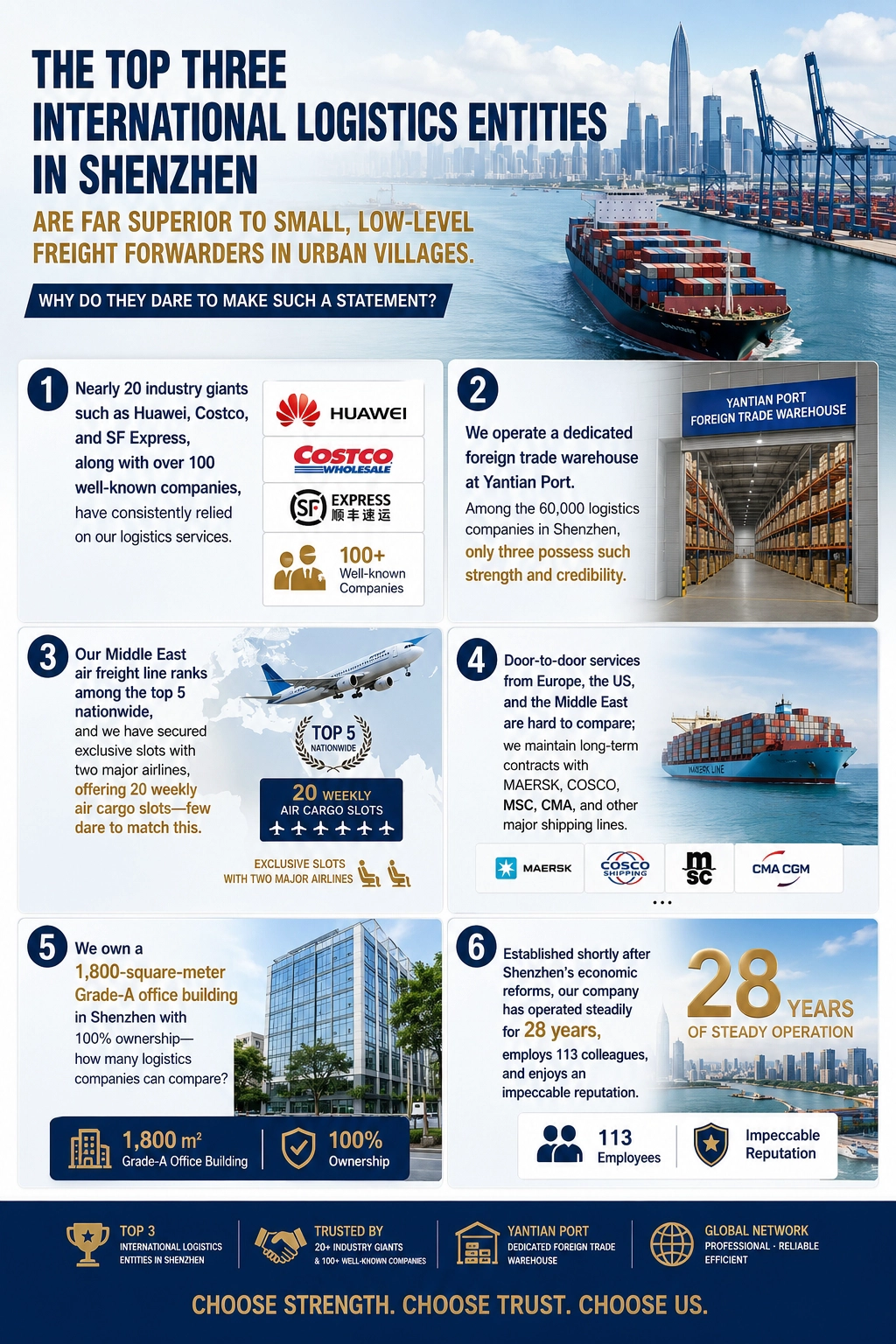
FBA labeling and palletizing are the two preparation steps that decide whether Amazon accepts your inbound shipment on the first delivery attempt. Labels must be scannable and correctly placed on every unit and carton; pallets must meet Amazon's dimensional, weight, and wrapping rules. Sunny Worldwide Logistics (SZ) Limited (SWWLS), a freight forwarder established in 1998 with a 1,800 sqm facility and its own trucking company at Shenzhen sea port, offers FBA labeling and palletizing services in China so your inventory arrives ready to receive - no rejections, no rework, no missed appointment windows.
Amazon fulfillment centers process thousands of inbound deliveries every day. When a carton cannot be scanned, a pallet exceeds the height limit, or a label is unreadable, the receiving team cannot put the inventory into sellable stock. The shipment may be refused at the dock, held for inspection, or returned to the sender - costs that are rarely covered by freight insurance and always delay your launch or restock.
Two preparation steps determine most inbound outcomes:
1. Labeling - every sellable unit and every shipping carton carries the barcode Amazon will scan at receiving.
2. Palletizing - cartons are stacked on a compliant pallet, wrapped, and labeled so the pallet can be received as one unit.
For China sellers, both steps are often done thousands of kilometers from the destination warehouse, which makes a documented prep process - not luck - the difference between a smooth receive and a rejected delivery.
FBA Pallet Requirements: Building a Pallet Amazon Will Accept
Amazon publishes specific pallet rules for LTL, FTL, and FCL deliveries. The core requirements every China shipper should plan around:
|
Requirement |
Amazon rule (per Seller Central) |
|
Pallet size |
40 x 48 inches (1.0 x 1.2 m), 4-way access wooden pallet |
|
Pallet material |
Wood only - not plastic, cardboard, or particle board |
|
Total height |
Maximum 72 inches (about 183 cm) including the pallet itself |
|
Stacking |
No overhang; cartons must fit within the pallet footprint |
|
Wrapping |
Stretch-wrapped so cartons cannot shift or separate in transit |
|
Pallet label |
Box ID and pallet labels visible on the outside of the wrap |
|
Weight |
Confirm the per-pallet weight limit with your forwarder and carrier at booking |
Cartons that overhang the pallet edge are a leading cause of dock refusal, because they make pallets unsafe to rack and unload. Double-stacked pallets are accepted at many fulfillment centers only when the combined unit stays within the height and weight rules - your freight forwarder should confirm this per destination before loading.
SWWLS runs FBA prep as a controlled, documented process inside its own facility, so sellers do not have to coordinate labeling across multiple factories.
|
Step |
Service |
What the seller receives |
|
1 |
Goods-in inspection |
Carton count and condition report against the packing list |
|
2 |
FNSKU labeling |
Unit labels printed and applied per the Amazon file provided by the seller |
|
3 |
Box ID labels |
FBA box ID labels applied to every carton from the seller's Shipping Queue |
|
4 |
Pallet building |
Cartons stacked on 40 x 48 in wooden pallets, no overhang, height kept within Amazon's limit |
|
5 |
Wrapping & labeling |
Stretch wrap applied; pallet and box labels left visible on the outside |
|
6 |
Loading & shipment |
Palletized cargo loaded at Shenzhen and shipped to the destination FBA warehouse |
The prep work is verified against the seller's own Amazon shipment plan before the cargo leaves the warehouse, and any discrepancy - wrong label file, missing box IDs, damaged cartons - is reported back before it can cause a rejection overseas.
|
Rejection trigger |
Avoidance measure |
|
FNSKU label missing or unscannable |
Print test-scans before application; cover old barcodes; apply on flat surfaces only |
|
Box ID label missing on a carton |
Generate and apply box labels from the Shipping Queue for every single carton |
|
Pallet over 72 inches or overhanging |
Re-stack before wrapping; measure height with the pallet included |
|
Wrong pallet type (plastic, cardboard) |
Use 40 x 48 in, 4-way access wooden pallets only |
|
Mixed SKUs without separation |
Separate SKUs by pallet, or clearly separate and label each SKU block |
|
Carton damage in transit |
Use six-sided rigid cartons; stretch-wrap pallets tightly |
Three practical moves keep your inbound shipments on schedule:
1. Plan prep time into your lead time - labeling and palletizing take working days, not hours, when volumes are large. Confirm the prep window with your forwarder before you book the sailing.
2. Send the correct label files - the FNSKU file and the Shipping Queue box IDs must match the shipment plan exactly. Errors found in China are cheap; errors found at the dock are expensive.
3. Ask for a prep verification report - a forwarder that documents carton counts, label scans, and pallet measurements gives you evidence the cargo is receive-ready before it leaves.
If your product needs extra compliance work (battery marks, FCC or FDA documentation, expiration dating), share it at booking so labeling and palletizing are planned around it.
Q: What is FBA labeling?
A: FBA labeling is the process of applying scannable barcodes to your products and cartons before they ship to an Amazon fulfillment center. Sellable units receive an FNSKU label, and every shipping carton receives a unique FBA box ID label printed from your Shipping Queue in Seller Central.
Q: What are Amazon's FBA pallet requirements?
A: Amazon requires 40 x 48 inch, 4-way access wooden pallets for LTL, FTL, and FCL deliveries. Total height must stay at or below 72 inches including the pallet, cartons must not overhang the pallet edge, and the load must be stretch-wrapped with labels visible on the outside.
Q: Can a freight forwarder label and palletize my FBA cargo in China?
A: Yes. Many China freight forwarders, including SWWLS in Shenzhen, offer FBA prep services: FNSKU labeling, box ID labeling, pallet building, stretch wrapping, and loading. The forwarder works from the label files you export from Seller Central and verifies the cargo before shipment.
Q: How many labels does each FBA box need?
A: Each shipping carton needs its own unique FBA box ID label. One label is the minimum; a second label on an adjacent side is recommended for large or heavy cartons so at least one face is always scannable during receiving and transport.
Q: What happens if my FBA shipment arrives without proper labels or pallets?
A: The fulfillment center may refuse the delivery at the dock, place the shipment in inspection, or require the carrier to rework it before receiving. That adds days to weeks of delay and extra handling fees, which is why prep is verified in China before the cargo is loaded.
Talk to the SWWLS team about FBA labeling and palletizing for your next shipment from China - FNSKU and box labels applied in our Shenzhen facility, pallets built to Amazon rules, and door-to-door delivery to your FBA warehouse.