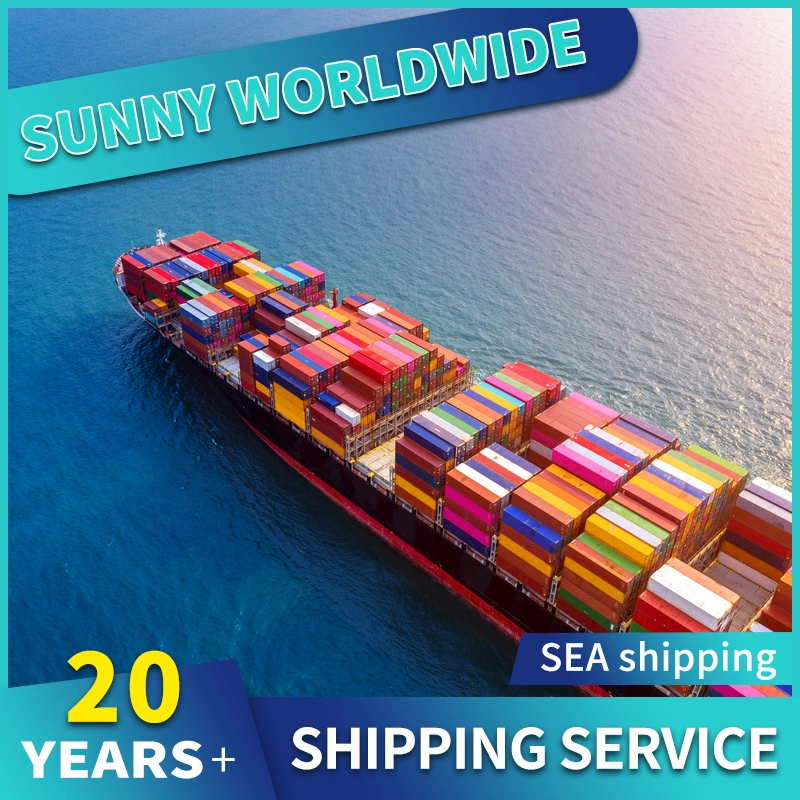
For Amazon sellers with inventory ready in Shenzhen, fast ocean freight can provide a balanced option between delivery planning and the higher cost of air freight. The outcome depends on more than the vessel schedule: cargo readiness, origin handling, documentation, destination import arrangements, inland capacity, and FBA receiving all influence the route.
The most useful information for a forwarder arrives before booking: product description, SKU or item reference, quantity, carton count, dimensions, gross weight, packaging, cargo-ready date, supplier address, and FBA destination. This information supports freight calculation, export documentation, space planning, and final-mile coordination.
A request for the fastest available sailing without a complete cargo profile may lead to an incomplete comparison. Sellers should ask which route, schedule, destination handling, and delivery scope the proposed service actually represents.
Sunny Worldwide Logistics (SZ) Limited was established in 1998 and operates as a full-service domestic and international freight forwarder based in China. The company owns a Class A office of 1,800 square meters and a trucking company in Shenzhen sea port, supporting direct control over the first mile of every shipment.
Origin control helps connect supplier pickup, cargo receiving, export preparation, and ocean handoff. It cannot remove carrier, port, customs, weather, inland, or warehouse variables, but it can give the seller a clearer information chain at the start of the shipment.
|
Route Element |
Operational Question |
Why Sellers Should Confirm It |
|
Origin pickup |
Where and when will the cargo be collected? |
Affects readiness, receiving, and booking timing |
|
Ocean service |
Which sailing and routing are being proposed? |
Schedules and routing conditions vary |
|
USA gateway |
Which destination gateway supports the final warehouse plan? |
Port choice affects inland movement and delivery planning |
|
Import arrangement |
Who is the importer and customs contact? |
DDP wording must match the actual responsibility split |
|
FBA delivery |
What is the final warehouse and receiving requirement? |
Port arrival alone is not the same as FBA delivery |
DDP can simplify commercial planning when the quotation clearly identifies the included logistics scope. Sellers should review origin handling, ocean freight, destination handling, brokerage, duty and tax arrangements, inland transport, final delivery, and possible accessorial charges as separate elements.
The importer or its designated customs agent remains responsible for destination import formalities unless another arrangement is expressly confirmed in writing. Accurate product descriptions, values, quantities, invoices, packing information, and importer details remain essential.
Fast ocean freight is most useful when integrated into a replenishment plan rather than treated as an emergency promise. Sellers can improve delivery visibility by maintaining accurate cargo data, booking before the cutoff, aligning the FBA shipment plan with the final warehouse, and keeping a contingency for schedule changes.
Actual transit time and total cost vary by cargo, origin, destination, mode, sailing schedule, port conditions, customs processing, seasonal factors, and warehouse receiving requirements. A shipment-specific quotation remains necessary.
A Shenzhen-to-USA FBA fast ocean freight plan can help sellers balance replenishment timing and transportation cost when the route is built around accurate cargo data and a clearly defined DDP scope. The key is not an unsupported speed promise, but a coordinated process from supplier pickup through ocean transport, destination arrangements, and FBA delivery.
Sunny Worldwide Logistics (SZ) Limited is a China-based full-service domestic and international freight forwarder established in 1998. Its operation includes a Class A office of 1,800 square meters and a trucking company in Shenzhen sea port, supporting direct control over the first mile of international shipments.